Help & Support
Still not sure?
Check below to see if we can answer your questions
Frequently Asked Questions
Methane, or Ch4, has a Lower Explosive Level (LEL) of 5%. That means it only requires a small amount of Methane to leak into the air before it becomes dangerous. We calibrate our devices to go into alarm well before this can happen. We ensure that when your gas panels are reading 100% Ch4, it actually means there is only 2.5% Methane in the air.
We recommend two reactive levels. A 20% alarm and a 40% alarm. During the 20% alarm you would typically expect beacons and sounders to engage, fans to increase speed and louvres to open. This will encourage the gas leak to be eradicated from the space.
The 40 % alarm will continue to sound beacons, however fans should shut down completely and louvres should close. If a 40% alarm goes off, that means the leak is to be considered very serious and needs to be contained. By shutting down fans and closing louvres it will also stop any heat oxygenating and potentially igniting.
Here is a simple breakdown.
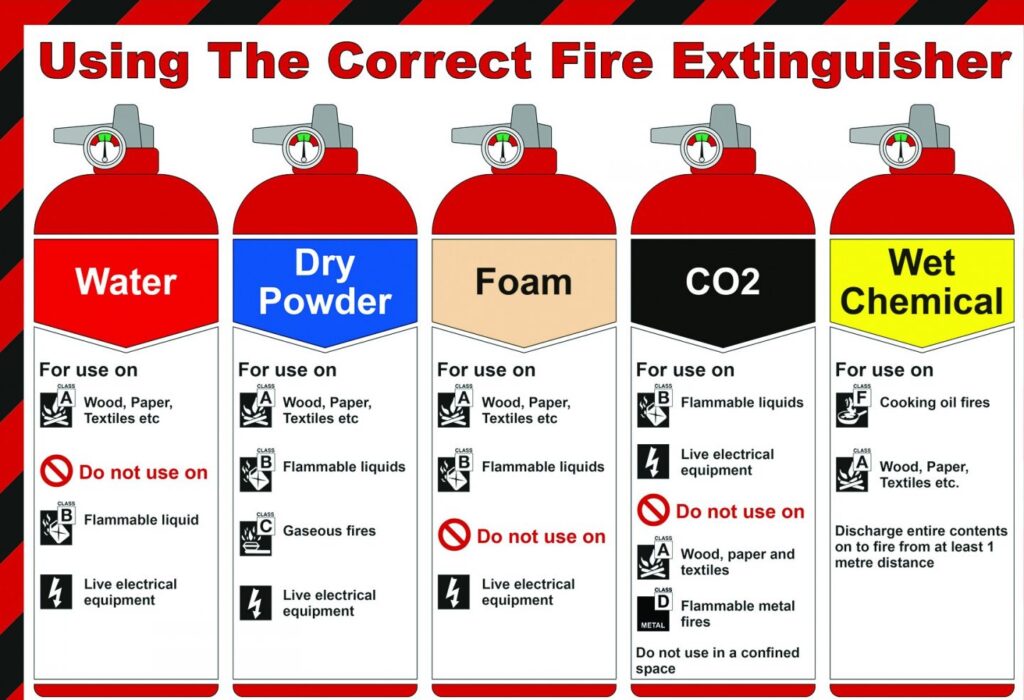
There are 6 groups of classes assigned to different types of fires:
- Class A – Solid Combustibles. For example paper, timber or fabric. USE: WATER.
- Class B – Flammable Liquids. For example paints, oil, fuel or grease. This is then dived into two states, running liquid or contained liquid. Running Flammable Liquids USE: Co2. NEVER USE: WATER. Contained Flammable Liquid USE: FOAM, POWDER, Co2
- Class C – Flammable Gases. For example aerosols, gas cylinders or mains gas. USE: POWDER
- Class D – Burning Metals. For example, Aluminium, Magnesium or Titanium. USE: DRY CHEMICAL
- Class F – Cooking fires. For exmaple household cooking oil and fats. USE: WET CHEMICAL, FIRE BLANKET. NEVER USE: WATER, FOAM.
- Electrical Fires – Previously designated as Class E, these fires can be deceptively dangerous. When electrical equipment burns it can often give off toxic fumes, and when attempting to extinguish them, you run a risk of electrocution if source is not isolated. USE: Co2, POWDER. NEVER USE: WATER, FOAM, WET CHEMICAL
Fire Extinguisher Information
What Extinguishers Do I Need?
Here a very simple infographic to give you an idea on which extinguishers may suit you.
For example; Most regularly used extinguishers used are Co2 however for more industrial sites, Foam or Powder may be seen more commonly depending on what is nearby.
Feel free to Click Below to see how you can get in contact with us today to order
Click HereMore Info To Come…